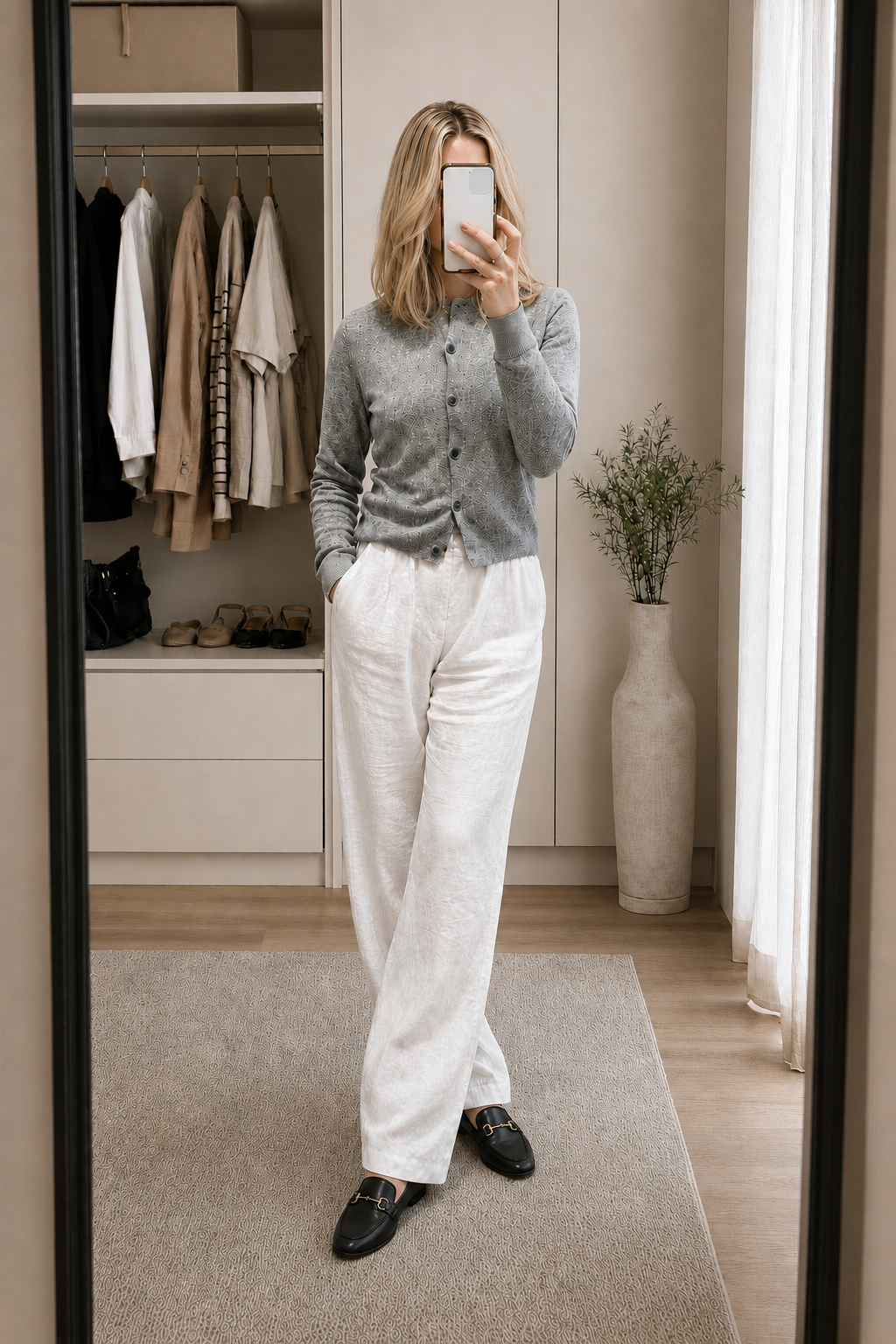
If you’ve read my post on finding your Kibbe body type, you already know the basics of the system. This post picks up where that one left off: how each family actually translates into a wardrobe, and which celebrities tend to fall into each one.
A quick disclaimer before we dive in: typing yourself (or anyone else) by Kibbe is part art, part science. Some Kibbe practitioners even disagree on the Kibbe type of certain celebrities. Treat the examples below as a way to see the lines and proportions in action, not as gospel.
Quick refresher on the five families: Dramatic (sharp, elongated), Natural (broad, blunt), Classic (balanced), Romantic (soft, curved), and Gamine (a mix of both in one body, often petite). Most people land within a family rather than as a “pure” type, which is why you’ll see Soft Natural, Flamboyant Natural, Dramatic Classic, and so on. Let’s go through how to actually dress each one.

Dramatic: Sharp Lines, Maximum Impact
Dramatics have long limbs, sharp angles, and an elongated frame. Clothes that mirror those lines, such as strong shoulders, vertical seaming, monochrome blocks and architectural shapes, tend to look intentional rather than overwhelming on this body type.
What works: structured blazers, long lean coats, asymmetric hemlines, high-shine fabrics, minimal fuss
What tends to fight the frame: small prints, fussy ruffles, cropped silhouettes that cut the line
Celebrity examples: Anjelica Huston and Tilda Swinton are two of the most commonly cited Dramatics. Their height, angularity, and ability to wear severe, graphic clothing without it wearing them is the hallmark of this type.
This structured blazer from Venroy has the dramatic lines and strong shoulders suited to Dramatics. I’d also look at this midi dress from COS, which has a longline, structured fit.

Natural: Relaxed, Broad, Effortless
This is my family, so I’m a little biased toward it. Naturals have broader, straighter lines through the shoulders and hips, with less curve definition than a Romantic and less sharpness than a Dramatic. The whole point of dressing a Natural body is texture and ease rather than precision tailoring.
What works: relaxed tailoring, natural fibres like linen and cotton, textured knits, slightly oversized fits, suede and leather
What tends to fight the frame: anything too fitted, stiff, or polished, which can read more like costume than clothing
Within this family, I’m specifically a Soft Natural, which means I have the broad, blunt Natural bone structure but with softer, more rounded flesh on top of it. For me, that means I get the best of both worlds: I can wear the relaxed, textured pieces a Natural thrives in, but I also borrow a little drape and softness from the Romantic side, think a slouchy linen dress instead of structured trousers.
Celebrity examples: Cameron Diaz is one of the most frequently cited Naturals, and most practitioners place her as Flamboyant Natural given her height and bone structure. Drew Barrymore is a commonly cited Soft Natural example, with the same broad, blunt lines but softer, rounder features that lend themselves to slightly more textured, relaxed dressing.
This midi linen dress from DISSH has the relaxed, flowing look that suits Naturals, particularly Soft Naturals. This wrap top from St Agni also works well because it gives the body room and softness without looking overly structured.

Classic: Balanced and Polished
Classics sit right in the middle of the yin-yang scale. Nothing about their proportions is exaggerated in either direction, which means the goal isn’t to emphasise a particular line, it’s balance and refinement.
What works: tailored separates, moderate proportions, quality over trend, simple jewellery, clean silhouettes
What tends to fight the frame: anything extreme in either direction, oversized or skintight, avant-garde shapes, heavy texture
Celebrity examples: Grace Kelly is the textbook Classic, which is fitting given Kibbe’s system draws heavily on old Hollywood references. Jacqueline Kennedy Onassis is another frequently cited example of this balanced, polished type.
A pair of straight or softly wide tailored trousers, like these St Agni pin tuck tailored pants, is an easy Classic staple: polished enough to feel refined, but simple enough for everyday wear. Pair it with something like this top from Henne to give the outfit a clean, slightly polished look that suits Classics.

Romantic: Soft Curves, Fluid Lines
Romantics have a high degree of yin: soft, curved, fleshy lines with delicate bone structure. Clothing that follows the body’s natural curves rather than fighting them is what makes this type look put together.
What works: soft draping, curve-skimming silhouettes, delicate details, lighter fabrics, fitted waists
What tends to fight the frame: stiff, structured tailoring, boxy cuts, anything that hides the waist
Celebrity examples: Marilyn Monroe is the type most people picture when they think Romantic, soft, curved, and unmistakably feminine in every line. Scarlett Johansson is another commonly cited example, particularly in her earlier red carpet years.
For everyday Romantic styling, look for pieces with softness, drape and gentle shaping, like the Venroy silk corset top or this Strapless dress from DISSH. Both give the body a softer, more feminine line without feeling overly fussy or costume-like.

Gamine: Contrast in One Body
Gamines have both yin and yang qualities present at once, often in a petite frame, which creates a kind of built-in contrast. The dressing strategy here is to play with that contrast rather than try to smooth it out.
What works: mixed textures, contrasting colour blocking, playful proportions, a mix of tailored and soft pieces in the same outfit
What tends to fight the frame: anything too uniform or “matchy”, which can flatten the natural contrast that makes this type interesting.
Celebrity examples: Audrey Hepburn is the most iconic Gamine reference, with her petite frame and the mix of delicate and sharp features that defined her look. Zooey Deschanel is a more modern example, often cited for the same playful contrast.
For everyday Gamine styling, look for pieces that feel compact, crisp and a little playful, like the Venroy Lightweight Cotton Baby Tee or the Venroy Stripe Cotton Shorts. Both pieces create shorter, broken-up lines that suit Gamine styling, while still feeling casual and easy to wear day to day.

A Few Final Notes
If you read through all five and felt like you saw a bit of yourself in two or three of them, that’s normal. It’s exactly why the system has sub-types. Knowing your type isn’t about restricting yourself to a list. It’s about understanding why certain pieces in your wardrobe already feel effortless, and why others have been quietly working against you the whole time.
If you’re still unsure of your Kibbe type, don’t rush to label yourself. I’d use this guide as a starting point, then notice which shapes, fabrics and outfit formulas feel easiest on your body. The goal isn’t to follow a type perfectly, it’s to understand why some clothes feel more natural than others.
You might also like:
- What is Your Kibbe Body Type? A Beginner’s Guide Plus How I Found Mine
- How to Find Your Colour Season: A Beginner’s Guide to Colour Analysis
- Soft Summer Capsule Wardrobe