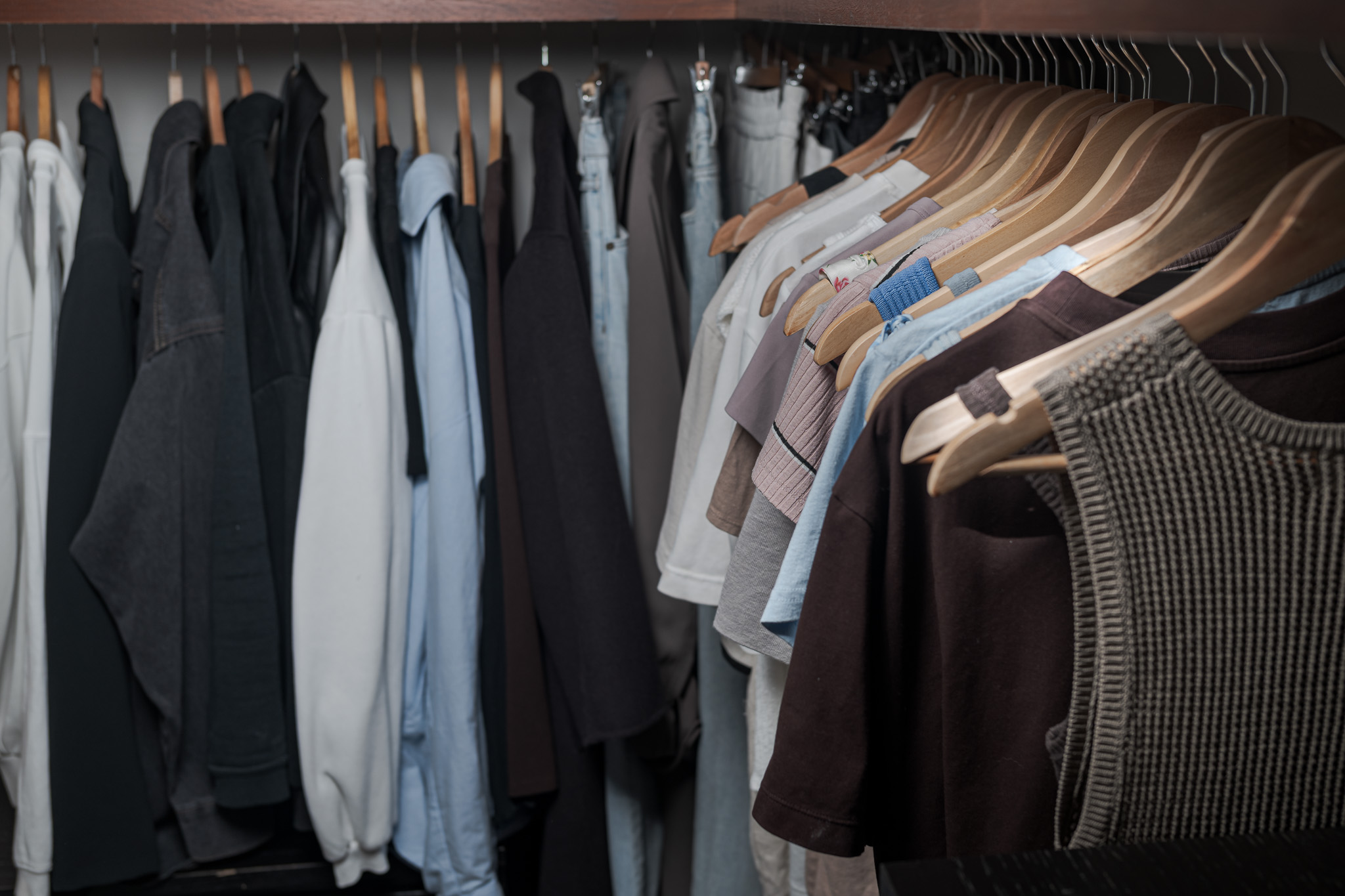
Lately, I’ve realised that what I really want isn’t necessarily a bigger wardrobe. I just want a wardrobe that feels nice to get dressed from in the morning—where I actually like what I see, the pieces work together, and I’m not digging through a collection of random things I’ve accumulated over the years.
I’m also trying to be much more intentional about what I buy. I’d rather slowly build a wardrobe with better-quality fabrics and more timeless pieces than constantly add things because they’re on trend or happen to be on sale.
But I’ve also realised that making your wardrobe feel more polished isn’t just about buying better clothes.
How your clothes fit, how you care for them, the colours you choose and even how you store everything can make a surprisingly big difference. Some of the best improvements don’t actually involve buying new clothes at all.
So, if you want your wardrobe to feel a little more elevated without suddenly developing a designer clothing budget, these are the things I think make the biggest difference.

1. Pay More Attention to Fit
You can spend a lot of money on a beautiful piece of clothing, but if it doesn’t fit properly, it’s probably never going to look quite right.
That doesn’t mean everything needs to be fitted. I love relaxed clothing, oversized coats and wider trousers. It’s more about making sure those proportions look intentional.
Trousers that are just slightly too long, sleeves that completely cover your hands or a waistband that constantly needs adjusting can make an otherwise lovely outfit feel less polished.
This is something I’m trying to pay more attention to when I shop. Rather than asking whether something technically fits, I’m looking at how it actually sits on my body and whether the proportions work.
And sometimes the answer is simply getting something altered. Ideally, taking your clothes to a tailor will give you the best result, particularly for more complicated alterations. For a quick and inexpensive option, I’ve also used iron-on hemming tape to shorten some of my trousers at home.
A relatively inexpensive pair of trousers that fits beautifully can look much more polished than an expensive pair that doesn’t.
2. Steam Your Clothes
There are few things that make a nice outfit look less put together than wrinkles.
Unfortunately, I also really dislike ironing.
This is why a garment steamer is one of those practical wardrobe purchases that I think is genuinely worth having. It’s so much easier to quickly steam a shirt or dress before getting dressed than pull out an ironing board for one item.
I use the Philips Handheld Steamer 3000 Series, a compact handheld steamer like this is perfect for quickly tidying up shirts, dresses and trousers without pulling out the ironing board.
It makes the biggest difference with pieces like linen shirts, cotton dresses and tailored trousers, where wrinkles can completely change the way the fabric hangs.
It only takes a couple of minutes, but clothes immediately look more polished.

3. Remove Pilling From Knitwear
I think this might be one of the most satisfying wardrobe maintenance jobs.
Even a beautiful wool jumper can start looking tired once little pills develop across the sleeves, sides and front.
And pilling doesn’t necessarily mean something is poor quality. Soft fibres like wool and cashmere can naturally pill where the fabric rubs against itself or other surfaces.
A fabric shaver can make an older knit look dramatically better in just a few minutes. I use this fabric shaver from Amazon, and it’s such an easy way to freshen up knitwear that’s starting to look a little worn.
You do need to be gentle, particularly with fine or delicate knits, but it’s such a simple way to extend the life of clothes you already own.
This is also where buying better and taking better care of what I own go hand in hand for me. There’s not much point spending more on a beautiful wool jumper if I’m not going to look after it properly.


4. Upgrade Your Hangers
This isn’t necessarily going to change how your outfit looks once you leave the house, but it can completely change how your wardrobe feels to use.
I want opening my wardrobe in the morning to feel calm and organised, and one of the simplest things I’ve done is use matching wooden hangers throughout my wardrobe.
There’s something about having everything hanging on the same style of hanger that immediately makes the space feel more cohesive and considered. Wooden hangers also feel substantial, hold their shape well and make even a fairly ordinary wardrobe look a little more polished. I use matching wooden hangers throughout my wardrobe, you can find a similar set here.
You definitely don’t need to replace every hanger at once, either. If your wardrobe is currently a mixture of plastic, wire and old shop hangers, you could gradually replace them as you go.
I still prefer to fold heavier knitwear rather than hang it, as the weight can stretch the fabric or leave bumps at the shoulders.
The goal isn’t to create a Pinterest-perfect wardrobe that you’re scared to touch. It’s simply to make the space you use every morning a little nicer and easier to navigate.

5. Look at the Fabric Before You Buy
This is probably the biggest change I’m making with my own shopping at the moment.
I’m trying to buy fewer pieces, pay more attention to fabric quality and choose things that I can realistically see myself wearing for several years.
I’ve become much better at checking the fabric composition before I buy something rather than only looking at how it appears in the product photos.
This doesn’t mean everything needs to be 100% cashmere, silk or linen, and I don’t think synthetic fibres automatically make something poor quality. Instead, I aim to buy clothes that are predominantly made up of natural fibres.
I tend to look for fabrics like:
- wool
- cotton
- linen
- good-quality denim
- cashmere or cashmere blends
This doesn’t mean I won’t buy something if it contains polyester, elastane or nylon. I just pay attention to the percentage of each fibre and the overall quality of the garment, because composition is only part of it.
Fabric weight, texture and drape matter too. A substantial cotton T-shirt often sits much more nicely than an extremely thin one. Trousers with enough weight to fall properly can look far more polished than fabric that clings in all the wrong places.
I’m increasingly happy to buy fewer things if it means I can spend a little more on something that feels beautiful, fits properly and has a genuine place in my wardrobe.
6. Build Around a Cohesive Colour Palette
An expensive-looking wardrobe does not have to be beige or made up entirely of neutrals. You can absolutely wear colour.
What I think makes more of a difference is having some consistency between the colours in your wardrobe, so you can easily combine pieces without every outfit feeling completely separate from the next.
Because I’m a Soft Summer, my wardrobe naturally leans towards softer, cooler shades like charcoal, blue-grey, cool taupe, soft white and muted pinks.
The nice thing about having that underlying palette is that so many of my clothes work together.
A blue-grey shirt can work with charcoal trousers. Those same trousers can work with a soft white knit. My coats and shoes then work with both outfits.
You definitely don’t need to know your exact seasonal colour palette to do this. But having a basic understanding of your undertones can be a good place to start when choosing colours that work well together and suit you. From there, identifying a handful of neutrals and colours that you genuinely enjoy wearing can make shopping and getting dressed much easier.
Before buying something, I’m increasingly asking myself whether the colour actually works with the wardrobe I already have.
If I love something but would need to buy three other things just to style it, it’s probably not as useful as it initially seems.
7. Look After Your Shoes
Shoes have a surprisingly big impact on how polished an outfit looks.
They obviously don’t need to remain pristine forever—they’re literally touching the ground—but basic maintenance makes a difference.
White sneakers can be cleaned to remove obvious scuffs and stains. Suede can be brushed to restore the texture. Leather can be conditioned, and worn or dirty laces can easily be replaced.
Having a good shoe cleaning kit on hand makes the process quick and easy, which means I’m much more likely to actually keep on top of it.
I think this becomes particularly important if you’re trying to own fewer shoes.
Rather than having endless pairs, I’d rather have a smaller collection that works with most of my wardrobe and actually look after them.

8. Keep Jewellery Simple and Intentional
Jewellery is one of the easiest ways to make a very simple outfit feel finished.
Even jeans and a basic knit can feel more put together with a pair of hoops and a simple necklace.
I tend to wear silver because it works particularly well with my cooler colouring and the muted colours in my wardrobe. I also prefer relatively simple jewellery that I can wear repeatedly rather than lots of statement pieces that only work with particular outfits.
A pair of simple hoops is probably one of the easiest pieces to wear.
I also like fine necklaces that can be worn alone or layered together.
The exact jewellery obviously depends on your personal style. You might prefer gold, mixed metals or something much bolder.
The point is really just to have a few pieces that feel cohesive and that you genuinely reach for.

9. Take Care of Your Handbags
I think handbags are another area where condition can make more difference than the price tag.
A simple structured bag that has been looked after can look incredibly polished, while an expensive bag that has completely lost its shape doesn’t necessarily have the same effect.
Try not to overload your bags, clean them according to the material and store them properly when you’re not using them.
Lightly stuffing a bag can help it keep its shape in storage, particularly if it’s a softer leather.
And if the inside of your handbag tends to become a collection of receipts, lip balm, keys and other miscellaneous objects, a handbag organiser can be surprisingly useful.
It also makes switching between bags much easier because you can move everything across at once.
10. Stop Buying Something Just Because It’s on Sale
This is something I’m still actively working on. A 50% discount isn’t actually saving me money if I wouldn’t have bought the item otherwise and it ends up sitting unworn in my wardrobe.
I’m trying to move away from the idea that finding a bargain automatically makes something a good purchase. Instead, before I buy something, I try to think about how it will actually work with what I already own.
Can I immediately picture at least three outfits with it?
Do I already own shoes that work?
Will it go under one of my coats or jackets?
Does the colour work with the rest of my wardrobe?
Would I still want it if I hadn’t seen it all over Pinterest?
And, probably the most important question: will I actually wear this in my real life?
I don’t think there’s anything wrong with buying trends. Fashion is supposed to be enjoyable, and sometimes you just really like something.
But I’m trying to make the foundation of my wardrobe much more timeless, then be more selective about the trends I add on top.
A More Expensive-Looking Wardrobe Doesn’t Have to Be Expensive
Ultimately, I don’t think the goal should be convincing everyone that your clothes cost more than they actually did.
For me, it’s more about having a wardrobe that feels considered.
Clothes that fit properly. Fabrics that feel nice to wear. Colours that work together. Knitwear that isn’t covered in pills. Shoes that have been looked after. A wardrobe where I can actually see what I own.
And you definitely don’t need to replace your entire wardrobe to get there.
In fact, I think the best place to start is with what you already have.
Steam the shirt you’ve been avoiding because it’s wrinkled. Remove the pilling from your favourite jumper. Clean your sneakers. Get the trousers you love hemmed properly. Pull everything out of your wardrobe that you haven’t worn in years so you can actually see the pieces you enjoy wearing.
Then, when something genuinely needs replacing or you want to add something new, you can be a little more intentional about what comes in.
That’s really what I’m working towards with my own wardrobe: fewer impulse purchases, better-quality fabrics, more timeless pieces and, ultimately, a wardrobe that just feels good to get dressed from in the morning.
You Might Also Like
Soft Summer Spring Capsule Wardrobe
Soft Summer Neutrals – The Best Neutral Colours to Wear
This post may contain affiliate links. If you purchase through one of these links, I may earn a small commission at no extra cost to you.